
Arnold Oberleiter’s AI Automation Course Review: Is It Worth It?
Discover whether this AI automation and AI agents course with n8n is worth the investment in 2026. We analyze the theoretical curriculum, practical projects, and value for money.
What is Arnold Oberleiter’s AI Automation Course?
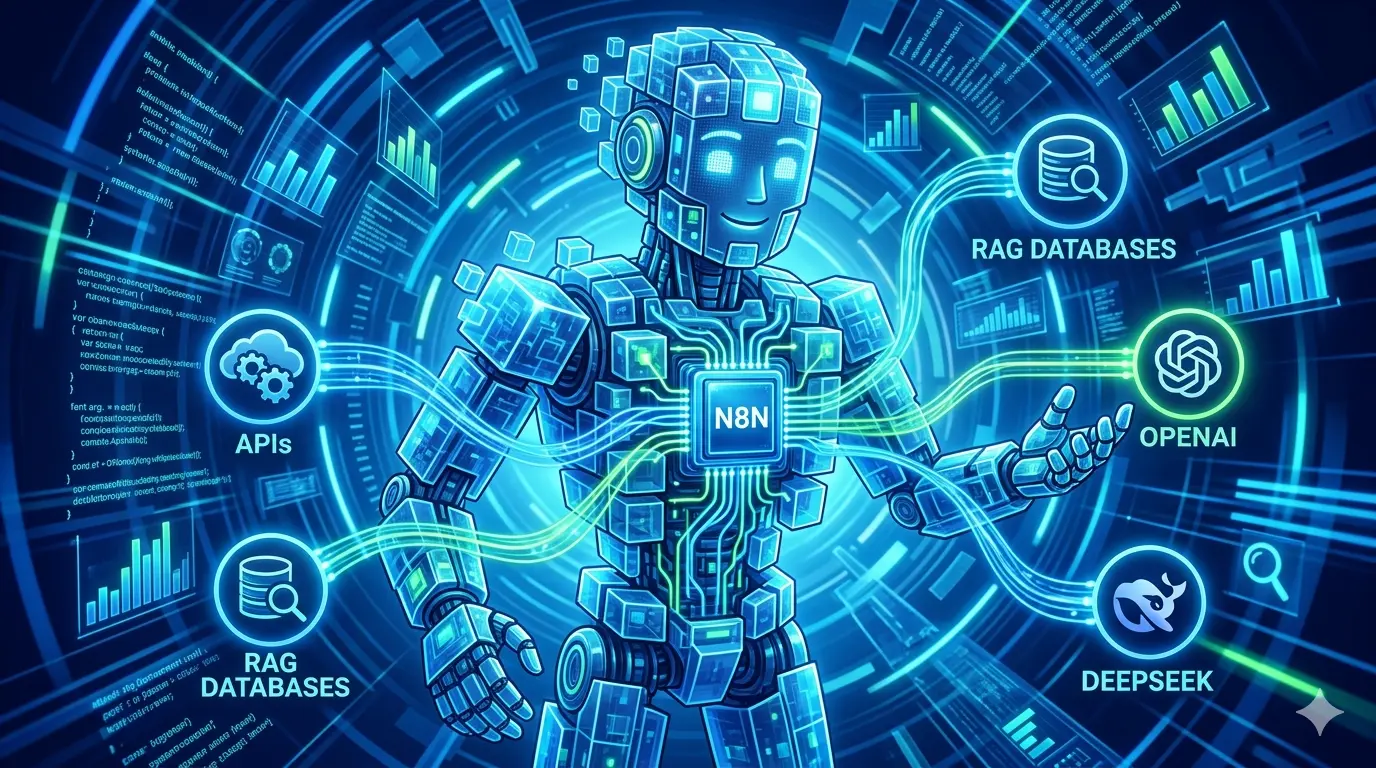
If you are looking to definitively master building scalable, intelligent workflows, AI Automation: Build LLM Apps & AI-Agents with n8n & APIs represents the gold standard of training in today’s market. This n8n course goes far beyond using conventional out-of-the-box tools like ChatGPT, diving headfirst into modern enterprise automation with artificial intelligence. Throughout the course, you will learn to architect autonomous ecosystems by integrating large language models directly with databases, legacy systems, and third-party platforms. The fully hands-on approach ensures that students can build and deploy cutting-edge solutions designed to save thousands of operational hours in any business or personal technology project.
The curriculum is exceptionally comprehensive, offering an excellent mix of cutting-edge theory and exhaustive practical training in building interconnected workflows. As a student, you will learn how to set up an AI automation course environment focused on developing advanced corporate tools. You will actively work with advanced features such as automated function calling, orchestration of open and custom APIs, and implementation of next-generation vector databases. The course stands out for bringing modern prompt engineering concepts applied directly to real-world commercial scenarios, enabling you to build an ecosystem of adapted bots operating with top-tier technical performance.
General Description & Objective
The central goal of this training is to enable any technology or business professional to become a senior developer specializing in autonomous systems. The key objective is to empower students to design, structure, test, and publish industrial process automation course workflows without relying exclusively on costly third-party platforms. By consolidating these skills, students become fully equipped to create bots that read, interpret, decide, and execute complex actions based on real-time data—delivering immediate operational intelligence and a massive competitive advantage in today’s global professional landscape.
Target Audience: Who is the ideal student?
The training serves both senior developers looking to specialize in generative artificial intelligence and entrepreneurs or managers focused on operational cost optimization.
Developers & Data Engineers
Technical professionals who want to master modern AI frameworks, advanced RAG architectures, vector databases, and enterprise-grade prompt engineering to accelerate project delivery for their clients.
Entrepreneurs & Business Professionals
Leaders looking to automate internal administrative processes, build integrated customer support agents on channels like WhatsApp or Telegram, or even start an agency specialized in automation solutions.
This versatility allows the course to transform both commercially focused individuals and experienced programmers into well-rounded specialists in deploying autonomous AI-driven automation solutions.
Inside the Course – AI Automation: Build LLM Apps & AI-Agents with n8n & APIs – Structure & Content
The course structure is progressively and modularly designed, divided into 13 comprehensive sections containing over 92 practical video lessons. Students begin by understanding the foundational theory of APIs and large language models, gain full technical mastery over n8n’s interface and local installation, and quickly move on to physically building automated cognitive agents with persistent memory ecosystems and real-time network connections.
Detailed Curriculum (13 Sections)
Methodology Highlights
The standout feature of this course compared to other educational products on the market is its tech-agnostic and razor-sharp approach. Arnold Oberleiter doesn’t just teach a single proprietary AI tool; he teaches the core architectural principles behind the modern AI stack, establishing this program as one of the best AI automation courses available. The methodology seamlessly guides students from using established commercial models like Claude and GPT to implementing advanced open-source models locally via Ollama, giving developers complete financial and technological independence when designing enterprise solutions.
Complementary Materials
In addition to the high-definition video content and crystal-clear audio, the course includes a rich package of digital assets that accelerate project implementation. Students get instant access to download over 29 ready-to-use n8n workflow JSON files, allowing them to import complete solutions directly into their local environments in just a few clicks. Furthermore, the course provides detailed documentation, ready-made JavaScript snippets for custom dynamic nodes and complex logic, advanced prompt engineering guides, and complete resources on enterprise data security.
Critical Analysis: Pros vs. Cons
What shines in the course (Pros)
- Practical Hands-on Approach: All AI architecture theory presented is immediately applied to real-world business scenarios.
- Focus on Cost & Open Source: The instructor teaches how to run local models for free via Ollama, drastically cutting dependence on paid API keys.
- Extensive Workflow Package: 29 downloadable JSON workflow files act as a major learning accelerator, allowing immediate cloning of full setups.
What could be better (Cons)
- Taught in English: Since videos and resources are fully in English, non-English speakers may face an initial learning curve.
- Initial Learning Curve: Dealing with Node.js, custom JavaScript, and local command terminals might feel intimidating for absolute non-coders.
- Third-Party API Dependency: While open-source options are covered, complex commercial builds still require active API keys and platform billing setup.
Who is the instructor?
Instructor Arnold Oberleiter, affectionately known across global developer communities as “Arnie,” is an established authority in automated intelligent systems and advanced AI technology.
Professional Background & Experience
Arnold brings extensive, long-term expertise working with Large Language Models (LLMs), having worked actively with these tools since 2018–2019, when the tech industry was taking its early public steps with open-source models like BERT and GPT-2. This depth of technical experience allows Arnold to teach AI concepts with historical, practical, and architectural precision, helping students understand the core rationale behind every feature.
Recognition & Other Projects
Arnold enjoys a solid international reputation across major digital learning platforms, currently boasting a community of over 208,000 students enrolled across 63 published courses. He actively manages a broad portfolio of digital solutions spanning software engineering, quantitative trading, global macroeconomics, crypto, and advanced financial investments.
Teaching Style & Pedagogy
Arnold’s teaching style stands out for its clarity, transparency, and hands-on focus. He avoids overly complex jargon, translating algorithmic concepts into intuitive diagrams and structured visual workflows. Additionally, he maintains an active, approachable presence, regularly answering technical questions in the discussion forums.
Reputation & Social Proof: What are students saying?
With an average rating of 4.6 out of 5 stars based on more than 9 thousand reviews, student feedback is overwhelmingly positive.
Platform Reviews
“This course completely transformed how I handle automation at my tech agency. Integrating n8n with local Deepseek saved me hundreds of dollars every month on paid commercial API infrastructure.”
“Arnold’s teaching methodology is amazing. He breaks down complex topics like vector databases and advanced prompt engineering with total visual clarity, making code deployment effortless.”
The vast majority of student reviews emphasize the high practical value and immediate utility of the downloadable JSON workflows. Minor critiques mainly point to the basic computer literacy required for setting up local terminal environments.
Pricing & Money-Back Guarantee
Pricing & Value
The official price of this course on Udemy typically ranges between $15 and $20 (or local equivalent), which is a great value given the extensive content and lifetime access.
Frequent discounts and promotions can lower the price even further.
Expert Tip: Since Udemy prices fluctuate frequently, the best way to secure the lowest rate is to check the current offer by clicking the button below. Even at full price, the practical skills pay for themselves quickly, but chances are high that an active discount is available right now.
Money-Back Guarantee
In line with Udemy’s buyer protection standards, the course includes a 30-day full refund guarantee, ensuring a completely risk-free enrollment.
Final Verdict: Is AI Automation: Build LLM Apps & AI-Agents with n8n & APIs Worth It in 2026?
Conclusion
Arnold Oberleiter’s training proves to be a highly rewarding investment for any professional aiming to excel at the cutting edge of AI automation and enterprise software engineering in 2026.
How to Enroll Securely
Don’t miss the opportunity to upgrade your technical skill set and automate complex corporate workflows. Click the button below to check current promotional pricing directly on Udemy.
Instant access • Satisfaction guarantee • Certificate included
Frequently Asked Questions
Does the course require prior advanced programming or software development experience? ▼
No senior programming experience is needed. Arnold covers essential concepts from scratch, including basic JavaScript syntax and terminal commands, guiding beginners step-by-step.
Can I sell the process automations and AI bots built during the training? ▼
Absolutely. The course features dedicated modules on business strategies, solution marketing, client proposals, pricing models, and acquiring enterprise clients interested in custom AI ecosystems.
Are the tools and automations created in class completely free to run? ▼
The training covers smart hybrid approaches. You will learn how to integrate paid commercial APIs (like OpenAI and Claude) as well as how to run powerful open-source models 100% free locally using Ollama.
How do I access the course materials and n8n workflow files? ▼
All course materials, documentation, prompt engineering guides, and 29 ready-to-use JSON workflow files are available for direct download within the Udemy student dashboard.
